

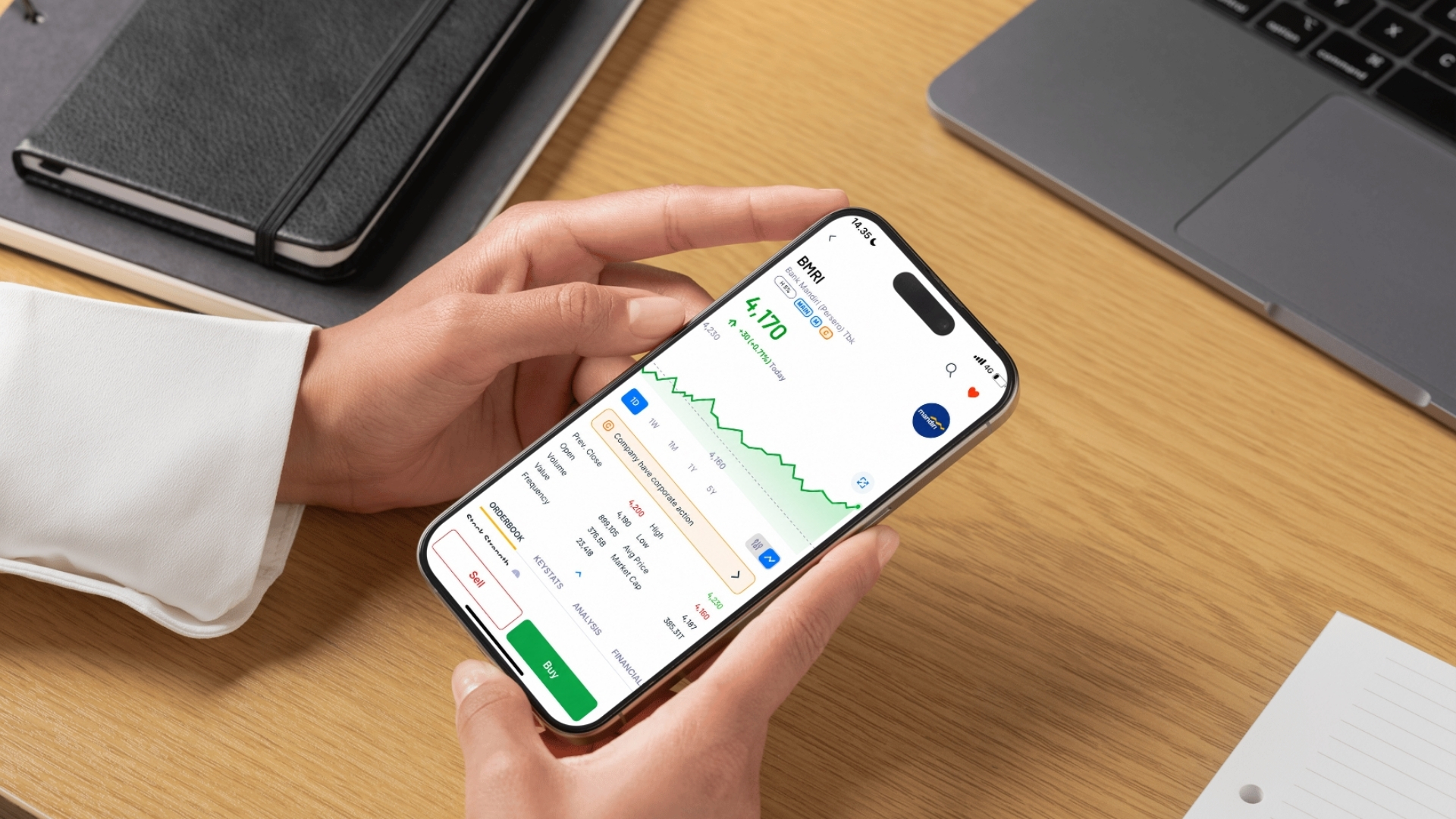
The stock you hold starts to rise and generate a profit. However, waiting for the price to keep climbing without a target can cause you to miss an opportunity to take profit.
Therefore, take profit helps you realize profits according to a predetermined target. So, when is the best time to do it? Keep reading to find out.
What Is Taking Profit?
Taking profit is the act of selling a stock when its price reaches a profit target. This concept is in line with the OJK term “ambil untung,” which refers to realizing gains from an increase in an asset’s price. In trading, stock TP marks the selling target for realizing capital gains according to the planned strategy.
Why Should Traders Set a Profit Target?
Setting a profit target before buying a stock helps traders plan their investment more clearly. This makes selling decisions less likely to be influenced by emotion or greed when the price continues to rise, because the trader already knows when the profit is sufficient to be realized.
How to Set a Take Profit?
Traders can consider the indicators below when setting a profit target:
- Resistance: Use the resistance area as one reference for the selling target;
- Price Trend: Pay attention to the trend direction to see whether the price still has room to rise;
- Momentum: Observe the strength of price movements before setting a target;
- Volatility: Adjust the target based on how much the price typically moves;
- Technical Analysis: Use the analysis results as a target reference and adjust them to the trading time frame.
Simple Stock Take Profit Example
For example, suppose you buy 1 lot of stock at Rp1,000 per share and set a 10% profit target. The take profit price is Rp1,100 per share.
- Purchase Price: Rp1,000 × 100 shares = Rp100,000
- Selling Target: Rp1,100 × 100 shares = Rp110,000
- Capital Gain: Rp110,000 − Rp100,000 = Rp10,000
When the price reaches the target, stock TP can be executed to realize the profit. This calculation does not yet take transaction fees and taxes into account.
Take Profit Does Not Mean You Have to Sell at the Highest Price
Take profit is an effort to realize profits according to a planned target, rather than chase the highest price. There is no certain way to know a stock’s peak. Therefore, technical analysis should be used to read momentum and support measured decision-making.
Take Profit and Cut Loss: Two Parts of Risk Management
Although their purposes differ, both help traders manage risk. By setting a profit target and a loss limit, traders have a reference point as prices move up and down.
|
Aspect |
Take Profit |
Cut Loss |
|
Purpose |
Securing profits |
Limiting losses |
|
Executed When |
Price reaches the profit target |
Price reaches the loss limit |
|
Focus |
Realizing capital gains |
Protecting capital from greater losses |
|
Determination |
Based on the profit target and analysis |
Based on risk tolerance and the loss limit |
Mistakes to Avoid When Setting a Take Profit
To apply stock TP effectively, avoid the following mistakes:
- Selling too quickly just because the price rises slightly above the target;
- Continually changing the target in hopes of making a larger profit;
- Setting a target without considering the stock’s condition and the strategy being used.
Plan Your Profit, Not Just Chase the Price
Taking profit is part of transaction planning, not simply a decision to sell when the stock price rises. With a clear target, traders can execute their strategy more consistently.
Monitor stock movements and trade according to your plan through the trading platform Mandiri Sekuritas. Let’s manage trading strategy more strategically with Mandiri Sekuritas!
FAQ
1. Is taking profit suitable for long-term stock investors?
Yes, especially if the profit target aligns with your investment strategy.
2. Does the take profit have to use a specific percentage?
No. The target can be adjusted based on the stock price, analysis, strategy, time frame, and individual risk tolerance.
3. What happens if the stock price continues to rise after taking profit?
That is normal. Take profit is carried out according to the target, not to ensure that you sell at the highest price.
4. Can take profit be carried out gradually?
Yes. You can sell part of your shares first while keeping the rest.


